
School of Computer Science and Engineering, UESTC, Chengdu, China
 JANUS-LoRA
 2026
2026
A Balanced Low-Rank Adaptation for Continual Learning
* Corresponding author
School of Computer Science and Engineering, UESTC, Chengdu, China

School of Computer Science and Technology, Tongji University, Shanghai, China

Shanghai Innovation Institute, Shanghai, China
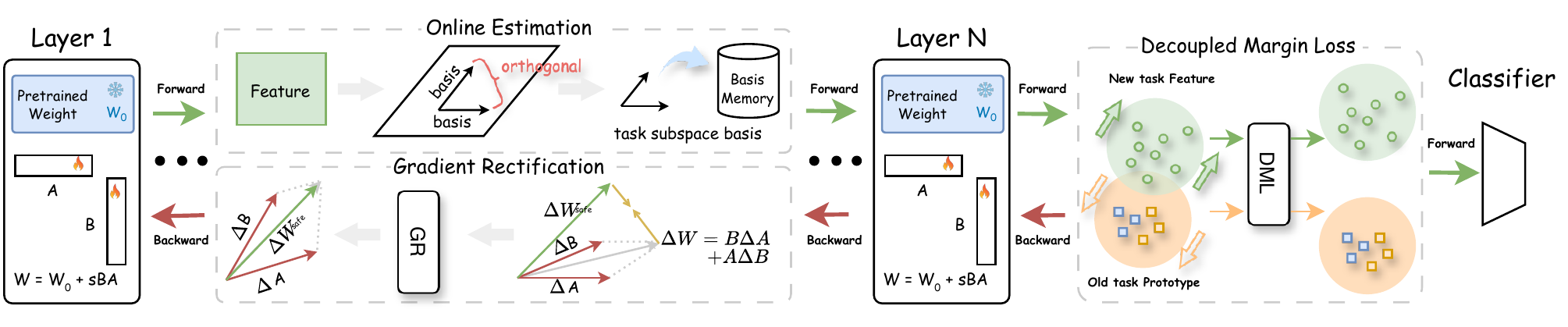
Old outputs remain unchanged when
ΔW · Xpast = 0
Orthogonality is a sufficient condition for zero interference: updates in the null space do not change historical activations.
ΔW = BΔA + ΔBA
LoRA does not optimize the full update directly. Independent updates to A and B can make the composite update deviate from the safe direction.
The paper diagnoses parameter-level misalignment and feature-space encroachment as the two coupled failures behind forgetting.
Maintains an orthonormal basis V for the protected historical subspace without storing old samples.
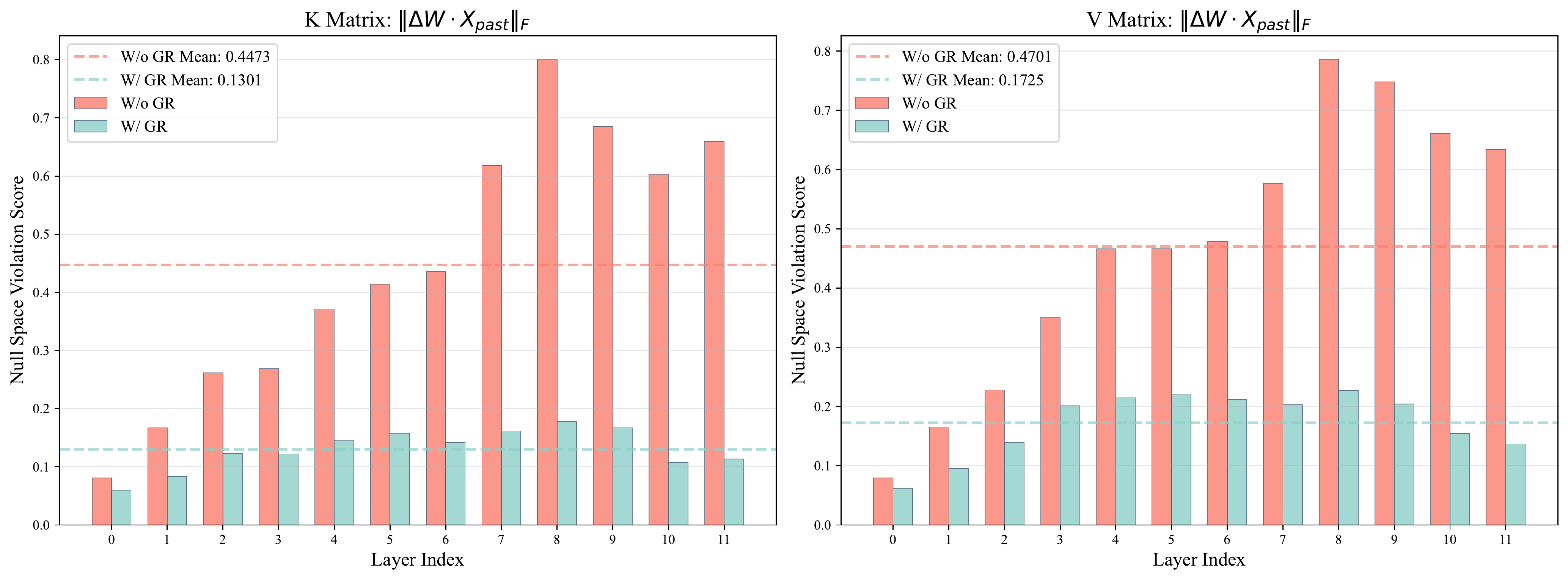
Converts the ideal safe update ΔWsafe into corrected LoRA factor updates ΔA and ΔB.
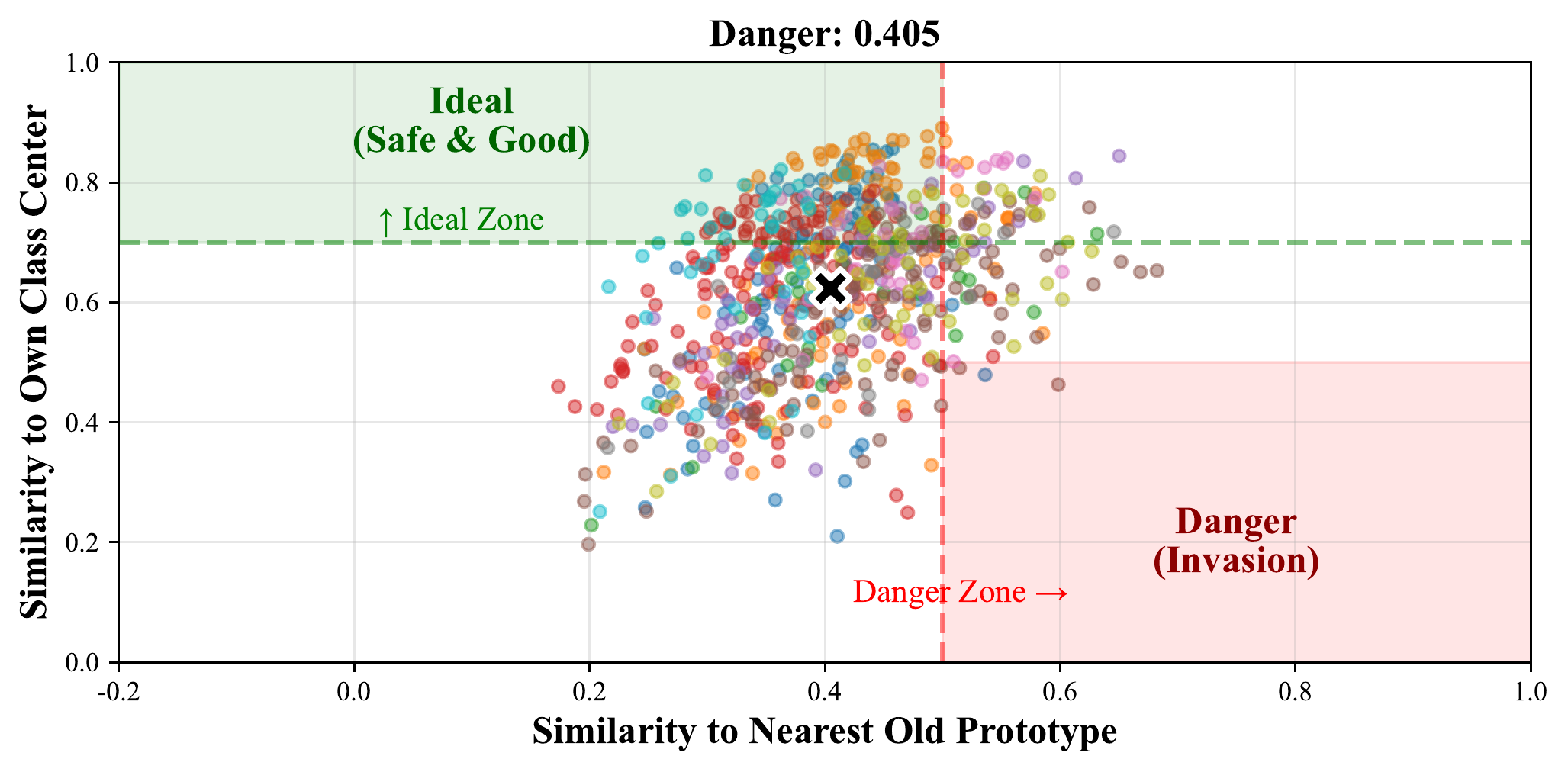
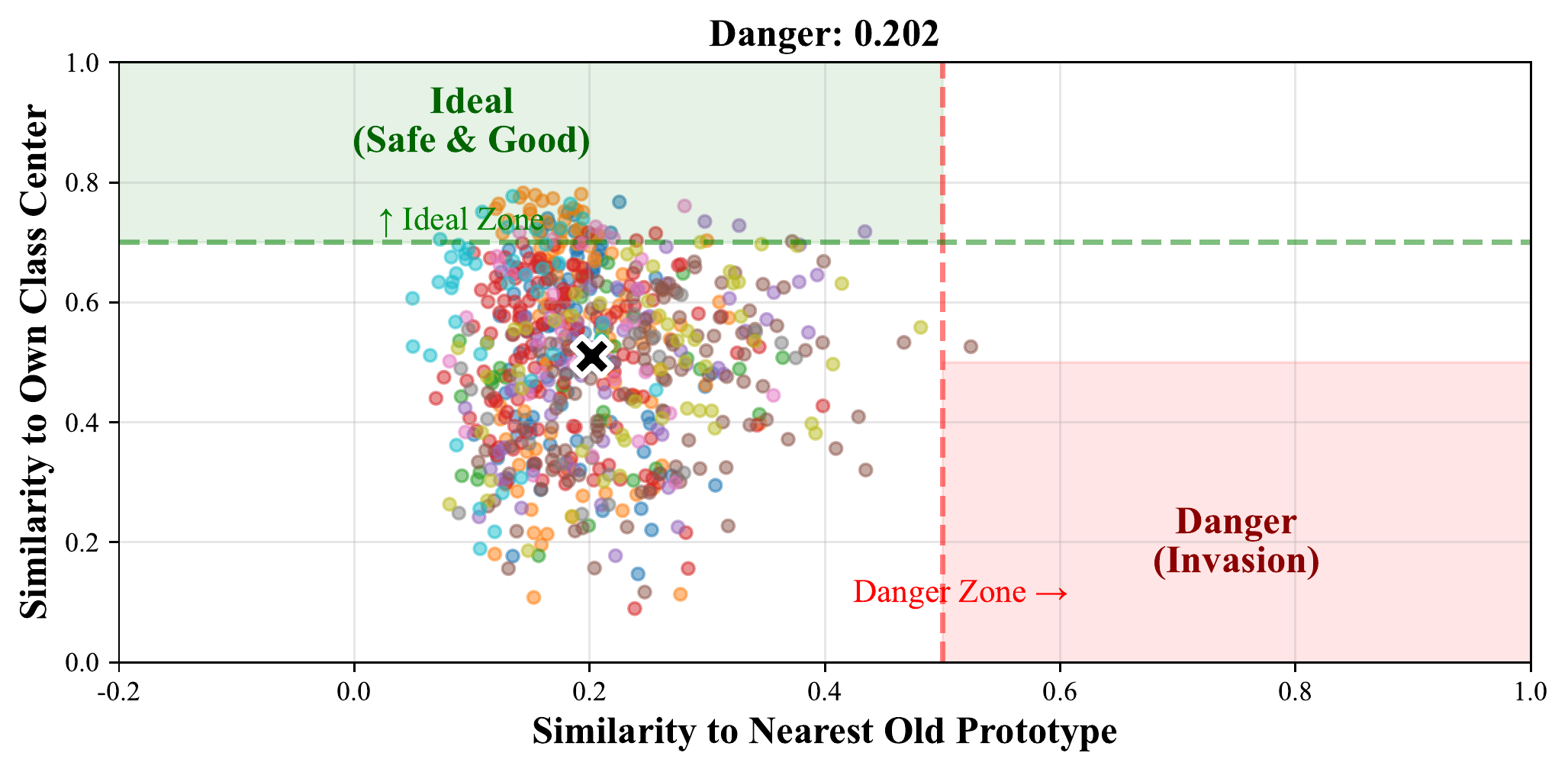
Separates new features from old prototypes so plasticity is preserved under the orthogonality constraint.
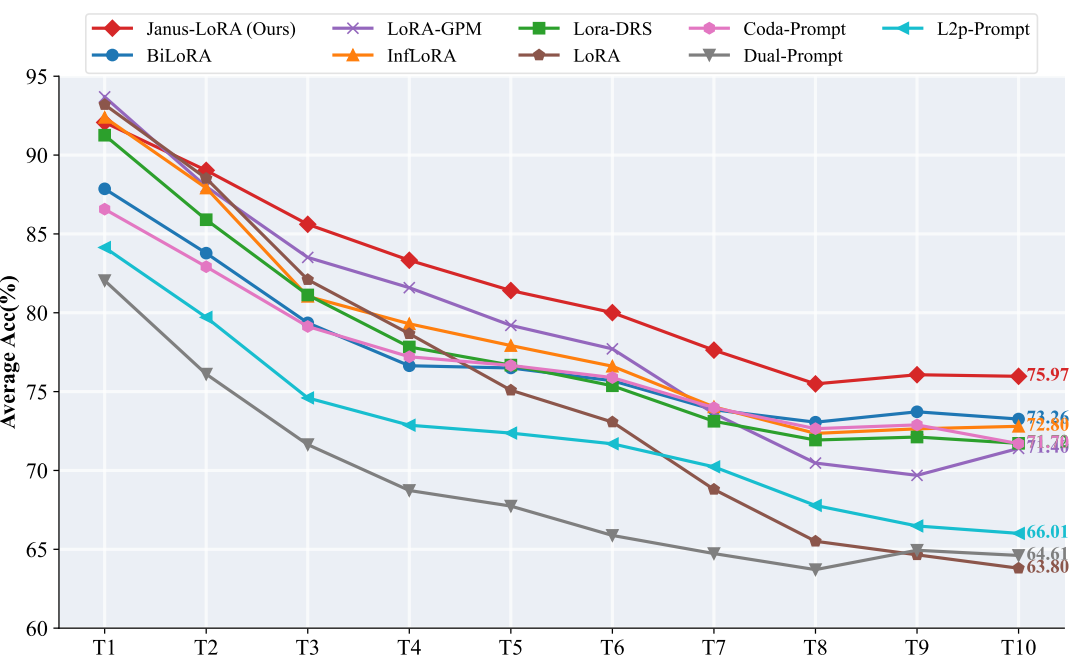
Compare JANUS-LoRA with CL and LoRA-based baselines under increasing ImageNet-R task counts.
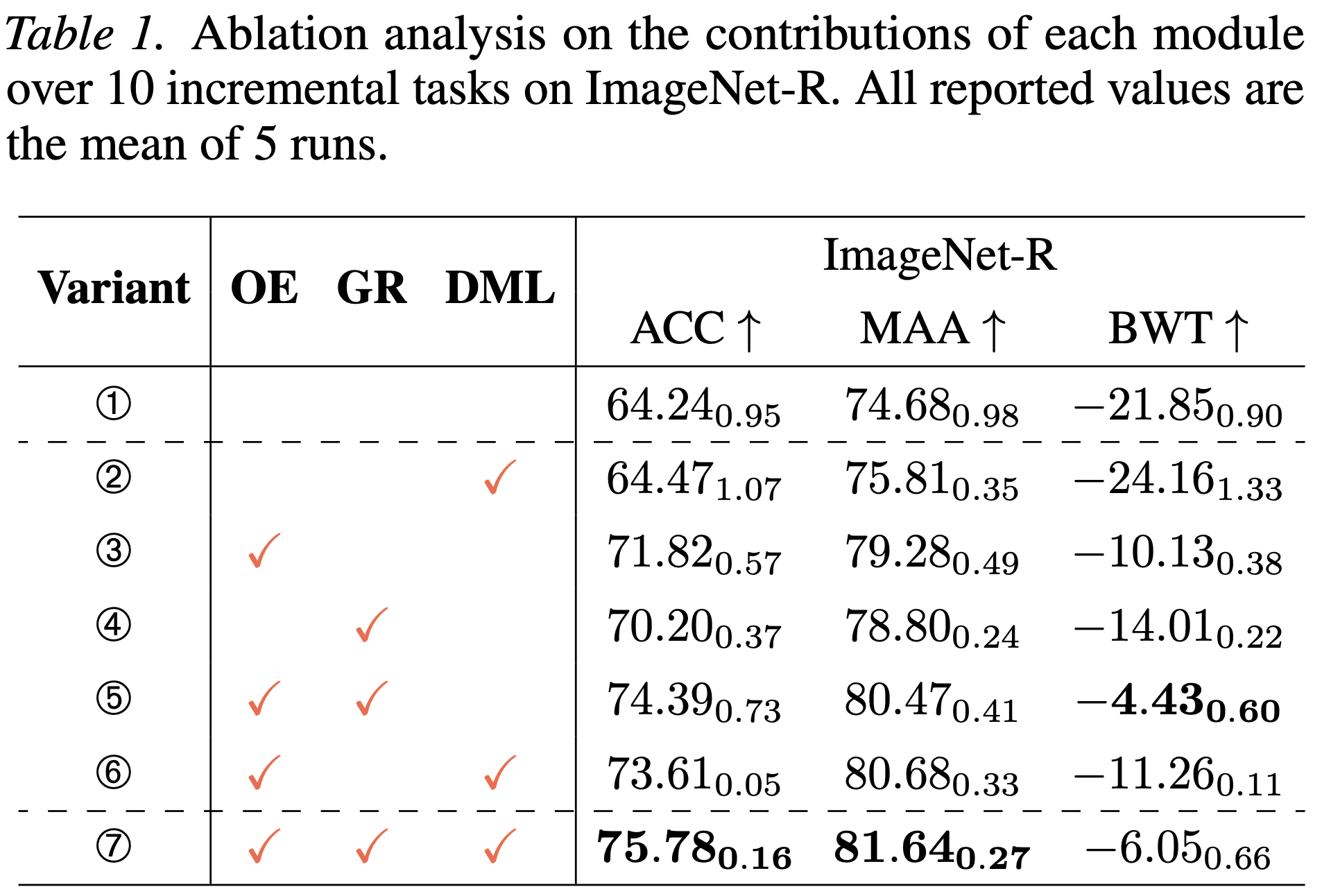
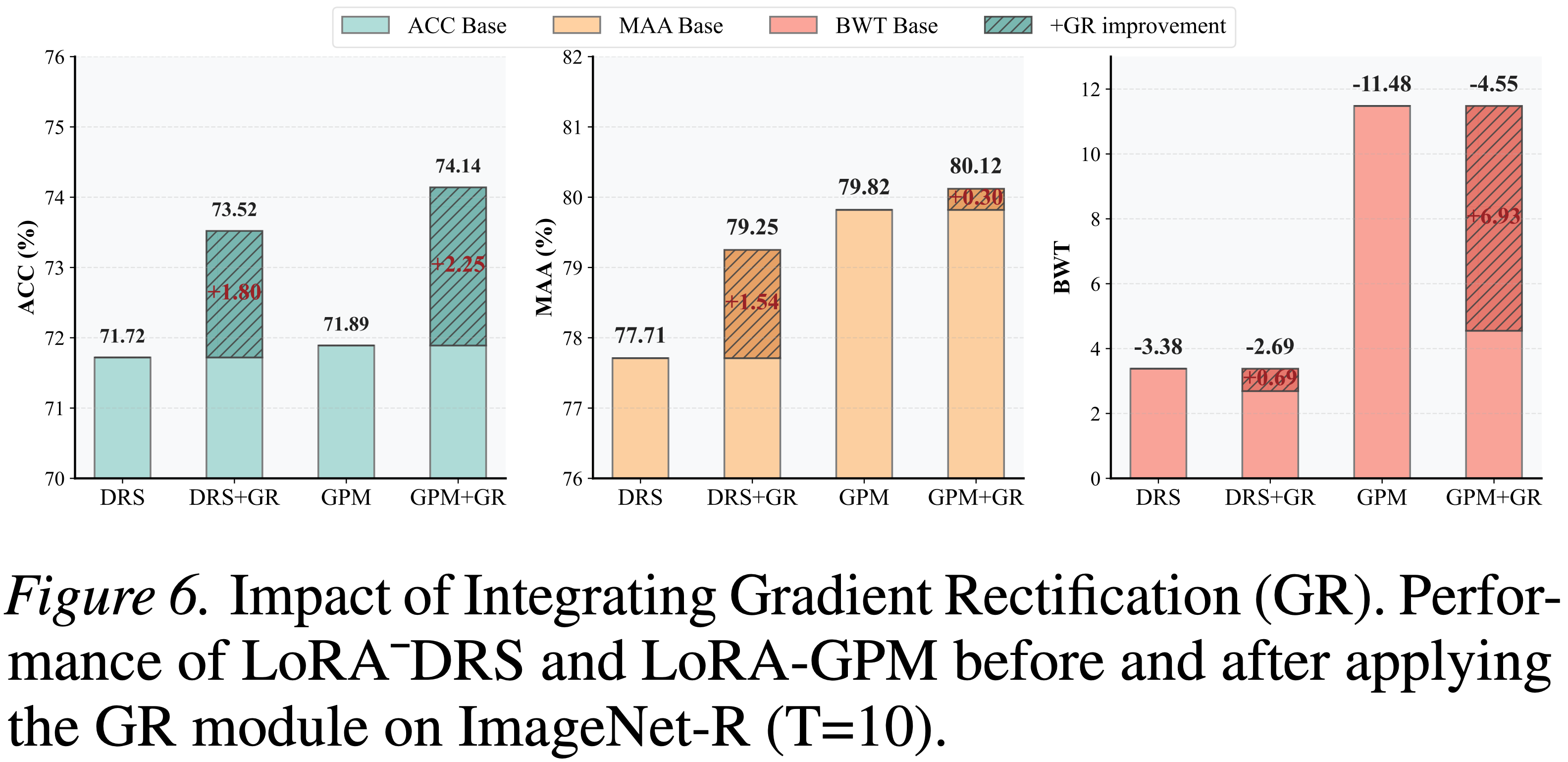
Conclusion: the method keeps the highest T=20 MAA at 77.11%.Use ablation and plug-in tests to separate the roles of OE, GR, and DML.
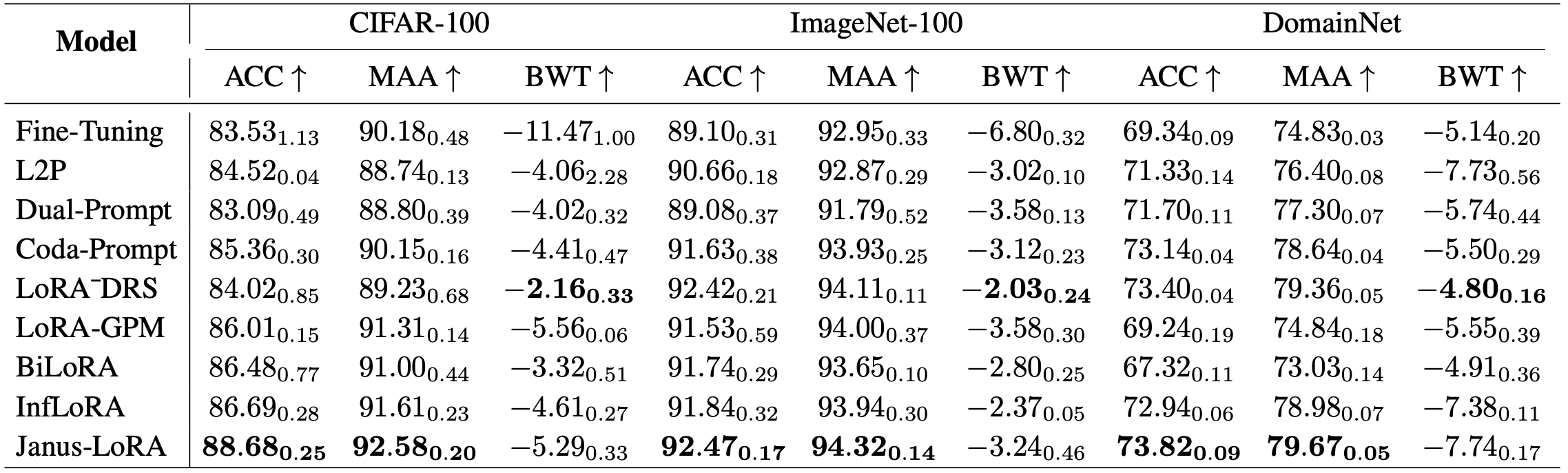
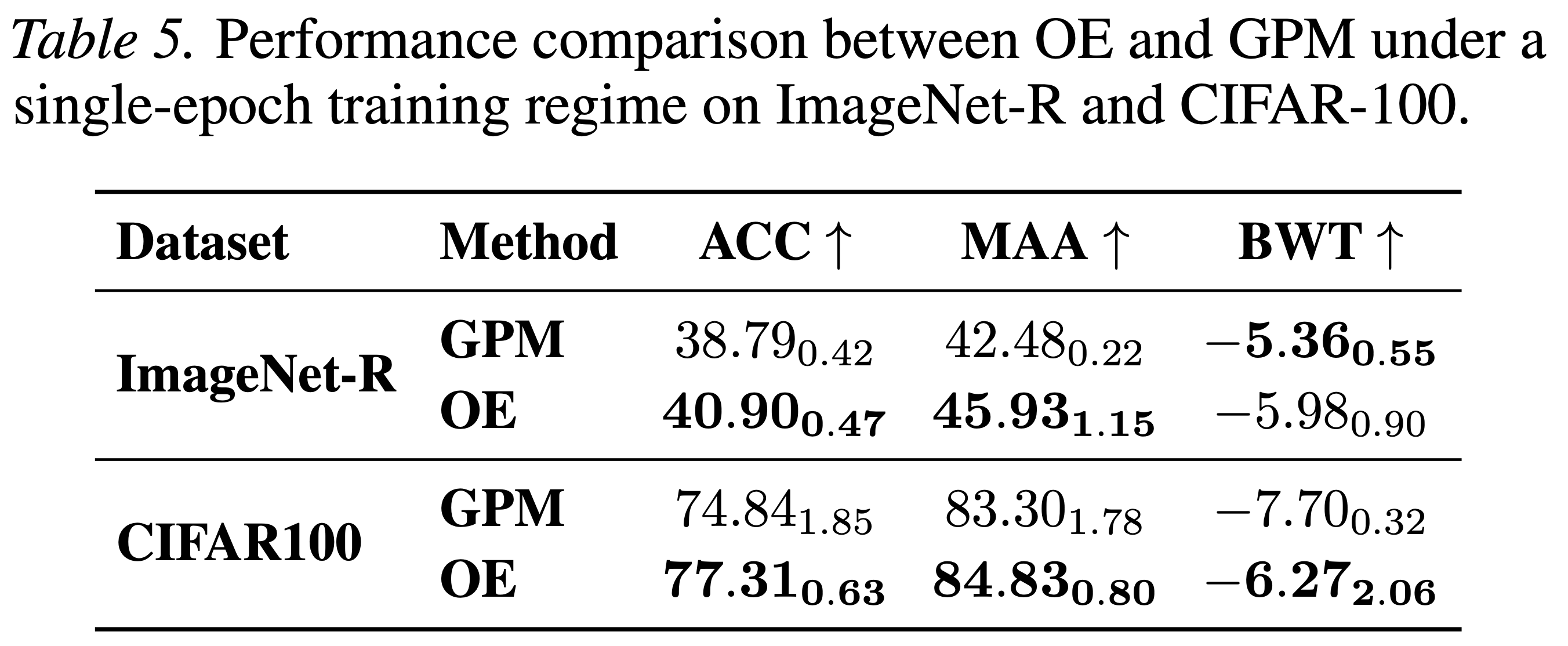
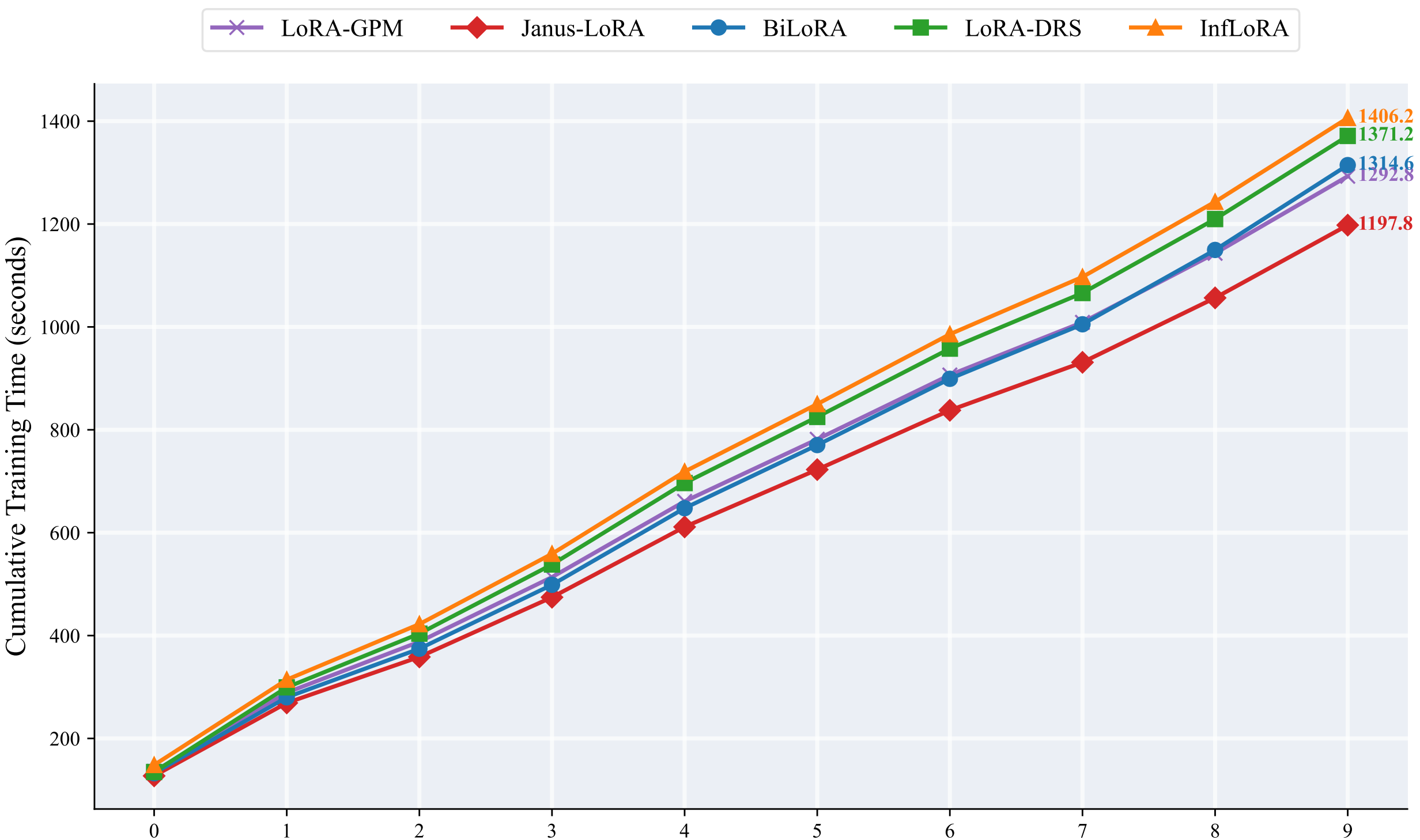
Conclusion: GR fixes parameter interference, while DML recovers plasticity.Check cross-dataset transfer, online estimation behavior, and cumulative training time.
Conclusion: the balance principle generalizes without excessive runtime cost.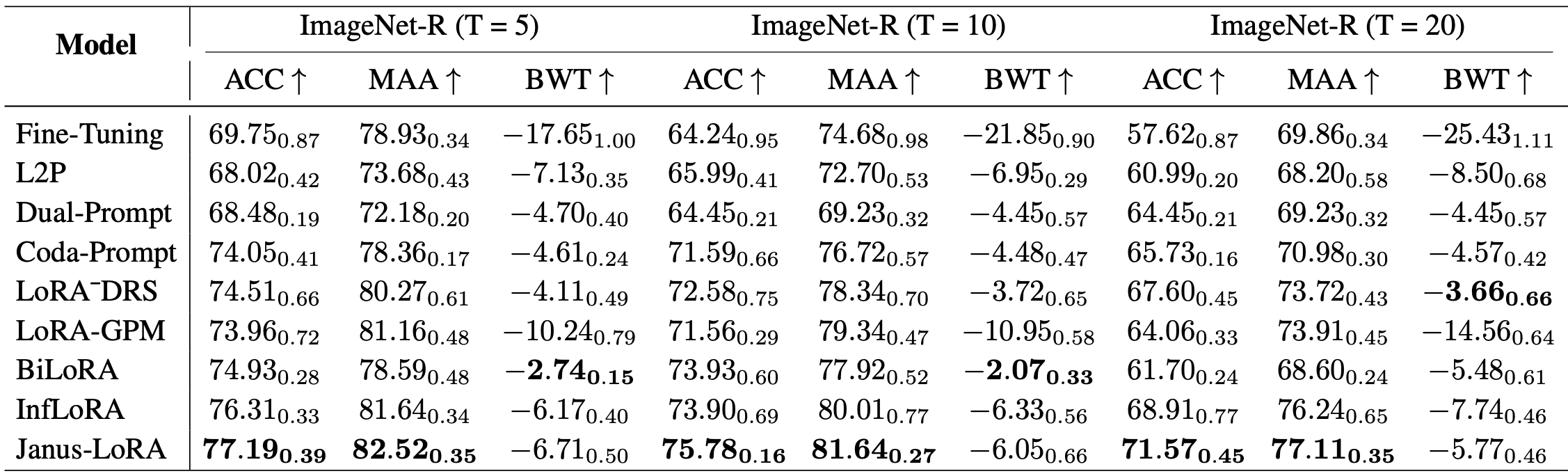
@inproceedings{chen2026januslora,
  title     = {JANUS-LoRA: A Balanced Low-Rank Adaptation for Continual Learning},
  author    = {Chen, Cheng and Zeng, Pengpeng and Guo, Yuyu and Gao, Lianli and Shen, Hengtao and Song, Jingkuan},
  booktitle = {International Conference on Machine Learning},
  year      = {2026}
}